
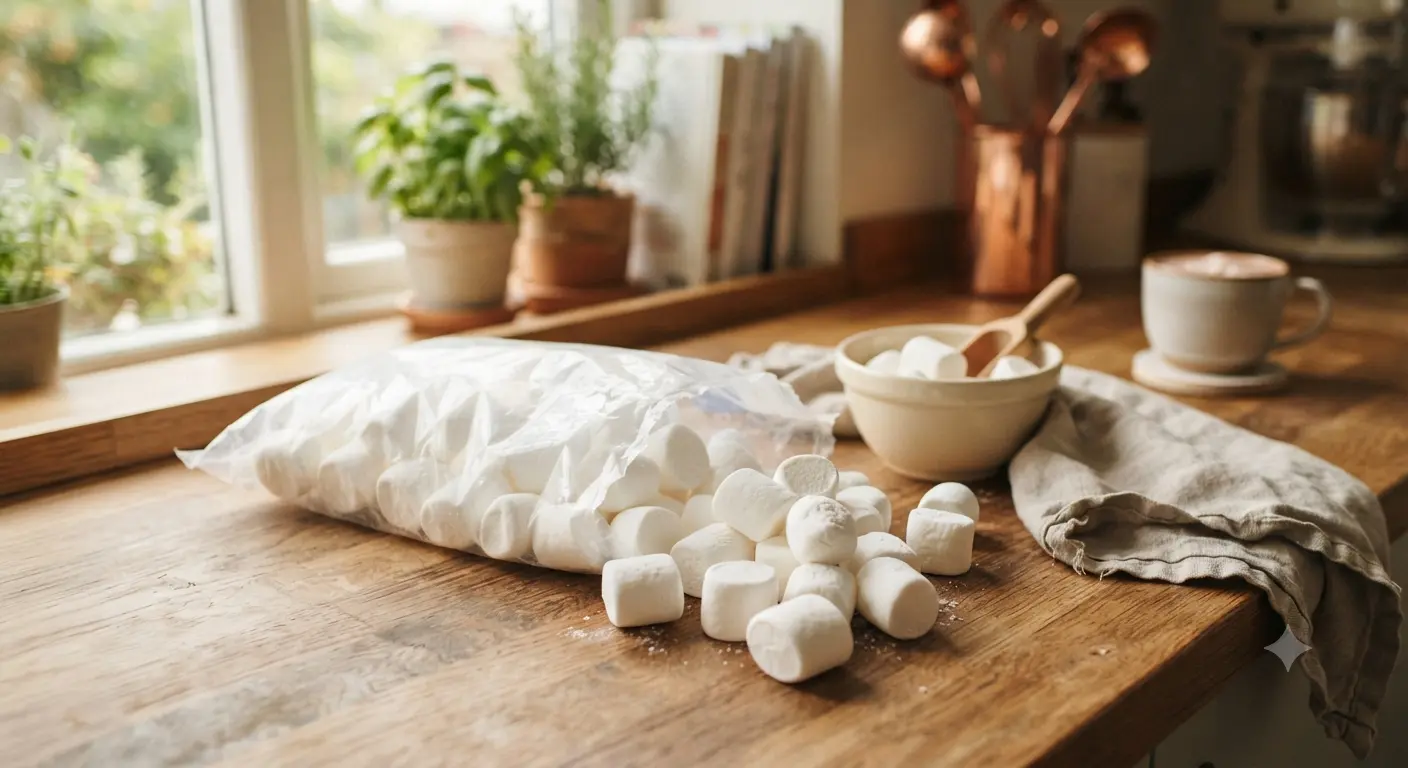
You open the pantry, find a half-used bag of marshmallows from a few months back, and pause. They look a little different than you remember — maybe firmer, maybe stuck together in one big lump. Is it still safe to eat, or is it time for the trash?
Short answer: You open the pantry, find a half-used bag of marshmallows from a few months back, and pause. They look a little different than you remember — maybe firmer, maybe stuck together in one big lump. Do marshmallows go bad, or is this just normal ageing? Is it still safe to eat, or is it time for the trash?
Short answer: yes, marshmallows can go bad, but it takes a lot more than just sitting in the pantry for a while. Here’s how to actually tell. Marshmallows can go bad, but it takes a lot more than just sitting in the pantry for a while. Here’s how to actually tell.
Do Marshmallows Go Bad?
Yes, but not in the way most people expect. Marshmallows are mostly sugar, corn syrup, gelatin, and air — an environment that’s genuinely hard for mould or bacteria to grow in. That’s why an unopened bag can sit safely in the pantry for many months past the printed date without spoiling in the traditional sense.
What actually happens over time isn’t spoilage — it’s a texture change. Marshmallows lose moisture, turn firm or chalky, or clump together. Yes, but not in the way most people expect. Marshmallows are mostly sugar, corn syrup, gelatin, and air — an environment that’s genuinely hard for mould or bacteria to grow in. That’s why an unopened bag can sit safely in the pantry for many months past the printed date without spoiling in the traditional sense.
What actually happens over time isn’t spoilage — it’s a texture change. Marshmallows lose moisture, turn firm or chalky, or clump together. That’s not the same thing as “gone bad.” Marshmallows going properly bad — meaning mould, an off smell, or a change that makes them unsafe — is rare, and it almost always comes down to one thing: moisture getting in. That’s not the same thing as “gone bad.” Marshmallows going properly bad — meaning mould, an off smell, or a change that makes them unsafe — is rare, and it almost always comes down to one thing: moisture getting in.
Signs Your Marshmallows Have Gone Bad
Texture changes are normal. These signs are not, and if you spot any of them, throw the bag out:
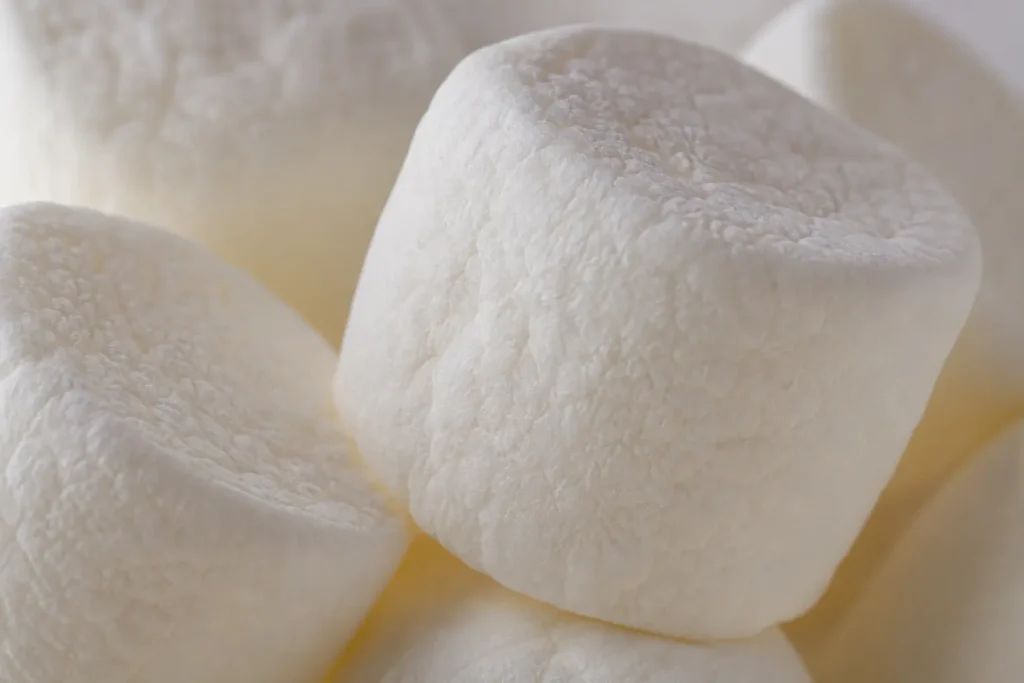
Visible mould — fuzzy spots, usually white, grey, green, or black. Marshmallows won’t develop mould easily, but if moisture has gotten into the bag (a damp kitchen, a torn wrapper, condensation from the fridge), it can happen.
A sour or “off” smell — fresh marshmallows smell faintly sweet and vanilla-ish. Any sour, musty, or chemical smell means something’s wrong.
A sticky, wet, or slimy surface — not to be confused with the light powdery coating some marshmallows have. Wet or tacky marshmallows have absorbed moisture and are a food safety risk, not just a texture issue.
Discolouration — pink, yellow, or brown spots that weren’t there before (and aren’t part of the flavour, if it’s a colored variety).
If you see any of these, don’t try to salvage part of the bag — when in doubt, especially if the bag was ever wet, damaged, or exposed to heat, discard the whole thing rather than risk it.
Why Humidity Is the Real Culprit
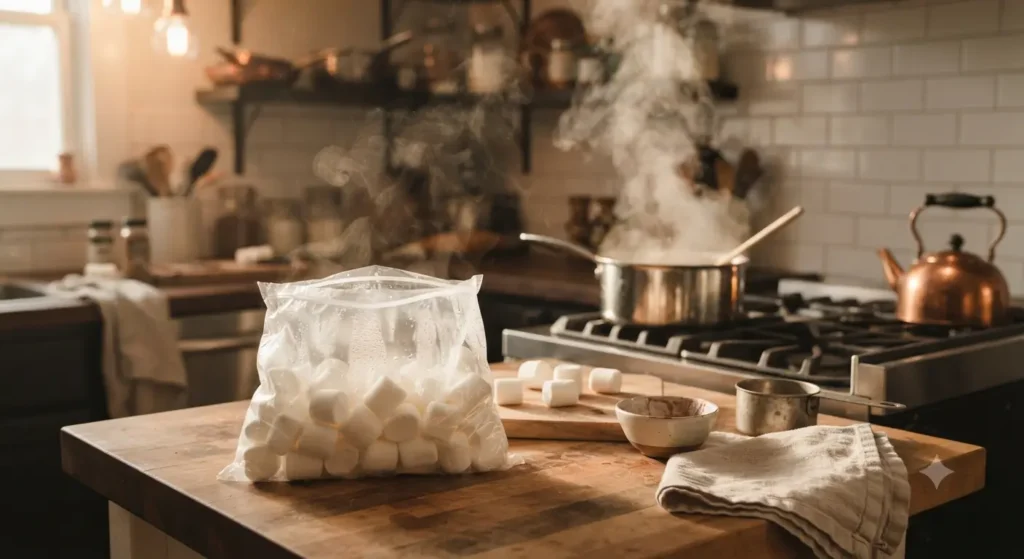
After spending years around large-scale marshmallow production (more on that background on our [About page]), the one factor I’d point to above everything else is humidity. Marshmallows are hygroscopic, meaning they naturally pull moisture from the air around them. In a production setting, high relative humidity is what tends to make the product turn tacky and spongy and shortens shelf life fast — the exact tipping point can shift depending on the recipe and packaging, but the pattern of humidity accelerating breakdown is consistent.
At home, the same principle applies on a smaller scale. A bag left open in a humid kitchen, stored near the stove, or kept in a garage that isn’t climate-controlled will typically degrade faster. After spending years around large-scale marshmallow production (more on that background on our [About page]), the one factor I’d point to above everything else is humidity. Marshmallows are hygroscopic, meaning they naturally pull moisture from the air around them. In a production setting, high relative humidity is what tends to make the product turn tacky and spongy and shortens shelf life fast — the exact tipping point can shift depending on the recipe and packaging, but the pattern of humidity accelerating breakdown is consistent.
At home, the same principle applies on a smaller scale. A bag left open in a humid kitchen, stored near the stove, or kept in a garage that isn’t climate-controlled will typically degrade faster than one kept in a cool, dry pantry — even if both bags are the exact same age. Humidity, far more than time on the shelf, is usually what determines whether marshmallows stay fine or actually spoil.
For exact storage timelines, see our guide to [how long marshmallows last after opening] — this article focuses specifically on safety and spoilage signs, not the timeline. And one kept in a cool, dry pantry — even if both bags are the exact same age. Humidity, far more than time on the shelf, is usually what determines whether marshmallows stay fine or actually spoil.
For exact storage timelines, see our guide to [how long marshmallows last after opening] — this article focuses specifically on safety and spoilage signs, not the timeline.
Are Expired Marshmallows Safe to Eat?
In most cases, yes — with some common sense attached. A “best by” date on a marshmallow bag is about peak quality, not a safety cutoff. If the bag has been sealed and stored somewhere cool and dry, marshmallows a few weeks or even a couple of months past that date are typically still fine to eat, even if they’ve firmed up a bit.
That said, “expired” and “safe” aren’t automatically the same thing. Use the signs above, not the date on the bag, as your actual test:
- If the package was properly sealed, stored somewhere cool and dry, and shows no mould, no off smell, and no sliminess, the marshmallows are generally likely to be safe — though quality may have declined a little.
- If any of those warning signs are present, or the bag was ever wet, damaged, or stored somewhere very hot, don’t eat it, regardless of the date.
Keep in mind the smell-and-look test is a helpful guide, not a guarantee — when a bag’s history is unclear, it’s better to toss it than take the risk.
Texture alone — firm, chewy, a little dried out — is not a safety issue. It just means the marshmallow isn’t at its best for eating straight out of the bag, though it may still work fine melted into hot chocolate or used in a recipe.
How to Store Marshmallows to Prevent Spoilage
Since moisture exposure is the main driver of actual spoilage, storage is mostly about keeping air and humidity away from the bag. The USDA’s FoodKeeper guidance on shelf-stable foods is a good general reference for pantry storage practices:
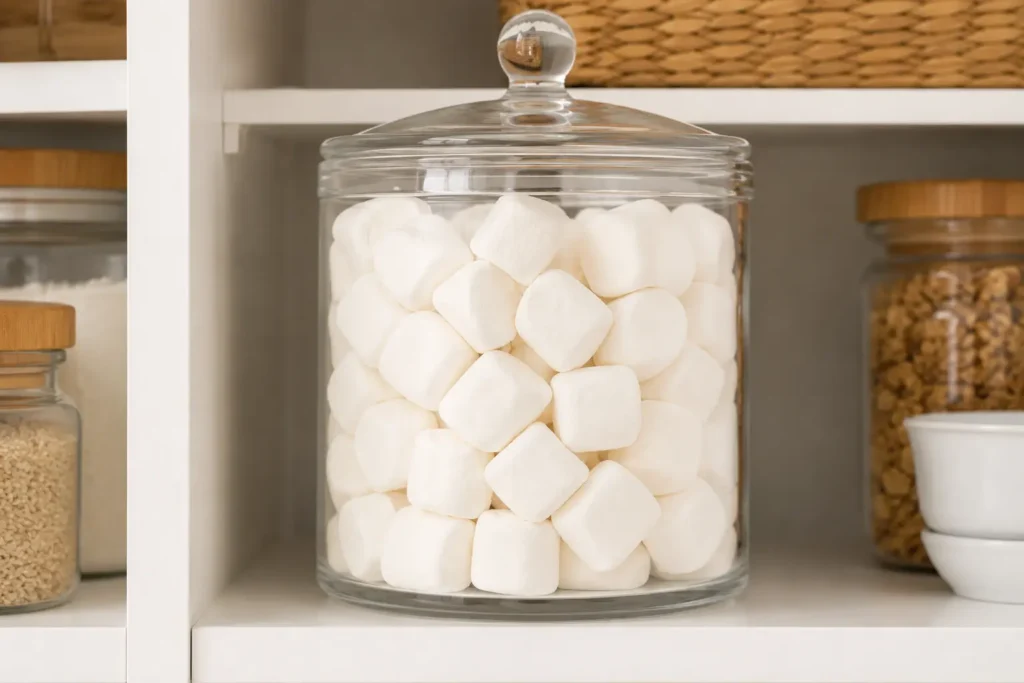
- 1 =Reseal tightly after opening. Squeeze out excess air and use a clip, tight-sealing bag, or airtight container.
- 2 =Keep them somewhere cool and dry. A pantry away from the stove or dishwasher works better than a spot near heat or steam.
- 3 =For everyday storage, a cool, dry pantry usually beats the fridge. Refrigeration can introduce moisture through condensation, which tends to speed up staleness rather than prevent it. If you do freeze marshmallows for longer storage, use a well-sealed, freezer-safe container and let them come back to room temperature while still sealed to limit condensation.
- 4 =Use an airtight container for long-term storage, especially if you’ve already opened the original bag.
- 5 =If marshmallows have started to firm up, an airtight container alone can help them soften slightly over time. Some people add a slice of bread to speed this along, but only do this if you can remove it promptly — leaving bread in the container too long raises the risk of introducing mould rather than preventing it.
Frequently Asked Questions
Does marshmallow go bad if left out overnight?
No. A single night out won’t cause spoilage. Extended exposure over days or weeks, especially in a humid room, is what leads to actual problems.
Do marshmallows spoil in the freezer?
Freezing doesn’t cause marshmallows to spoil, though texture can change once thawed. Store them in an airtight, freezer-safe container to limit moisture exposure.
How do I know if my marshmallows are expired?
Check the printed date as a general guide, but rely on your senses first: look for mould, smell for anything sour or off, and check that the surface isn’t wet or slimy. If all three check out, they’re almost certainly fine.
Does the expiration date on Jet-Puffed marshmallows mean they’re unsafe after that point?
No — like most marshmallow brands, the date reflects peak freshness, not a hard safety cutoff. Unopened bags stored properly are typically fine well past that date.
Can you eat hard marshmallows?
Usually, yes. Hard marshmallows are typically just stale, not spoiled. If there’s no mould, off smell, wetness, or unusual discolouration, they’re generally fine to use — though the texture won’t be ideal for eating straight out of the bag. They often still work well melted into recipes.
Can marshmallows grow mould?
Yes, though it’s uncommon. Marshmallows contain a lot of sugar and very little available moisture, which makes it hard for mould to take hold. But if moisture gets into an opened or damaged bag, mould can develop over time. If you spot any, discard the whole bag rather than trying to separate the affected pieces.
The Bottom Line
So, do marshmallows go bad? Rarely, and almost always for the same reason: moisture getting where it shouldn’t. Real spoilage — mould, bad smells, sliminess — is uncommon and almost always tied to moisture getting where it shouldn’t. A firm or slightly stale marshmallow isn’t a safety issue; it’s just past its best texture. Trust your senses over the date on the bag, store them somewhere cool and dry, and you’ll rarely need to throw a bag away before you’ve finished it.

Jordan Hale has spent close to two decades working hands-on in candy and confectionery production. Marshmallow Blog shares real, tested fixes and recipes drawn from that production-line experience.